Vegetables high in iron
Updated 26 November 2026 · 3 min read
The short answer
Chard and spinach are the ones to reach for, and stirring a tin of lentils or beans through the pan builds a bigger iron meal still. How much of that iron you take up depends on the rest of the plate.
Which vegetables are highest in iron?
Dark leafy greens hold the most iron, and most other vegetables sit well behind.
| Food | Iron (mg per 100 g) |
|---|---|
| Swiss chard, boiled | 2.3 |
| Spinach, boiled | 1.6 |
| Peas, boiled | 1.5 |
| Spring greens, boiled | 1.4 |
| Rocket, raw | 1.3 |
| Curly kale, boiled | 1.1 |
| Broccoli, boiled | 0.6 |
| Brussels sprouts, boiled | 0.6 |
| Green cabbage, boiled | 0.4 |
| Leeks, boiled | 0.2 |
All figures are iron per 100 g from McCance and Widdowson's Composition of Foods Integrated Dataset (2021), for the vegetable as eaten, boiled unless noted. A few herbs read very high per 100 g, fresh parsley among them at 7.7 mg.
Why don't I absorb all the iron in my greens?
Because vegetable iron is non-haem, and the body takes up a smaller share of it than of the iron in meat. From a mixed diet, people with low iron stores take up roughly 14 to 18 per cent of the iron they eat; from a vegetarian diet, roughly 5 to 12 per cent. What else is on the plate shifts how much of a meal's iron you take up: vitamin C helps, and tea or coffee with the meal holds it back.
How do I get more iron from my veg?
Add vitamin C to the meal, a squeeze of lemon over the greens or some chopped peppers in a stir-fry, which raises how much of the iron you take up from that meal. Tea and coffee with the meal hold some of the iron back, and some herbal teas and cocoa do the same.
Can cooking add iron too?
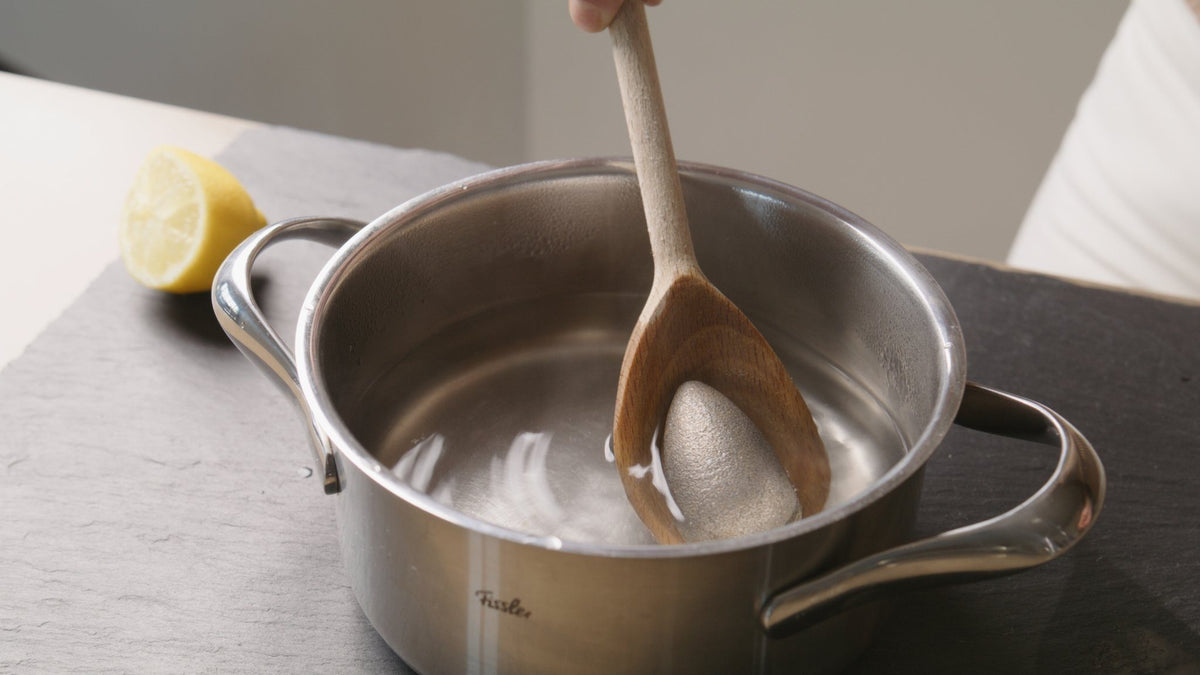
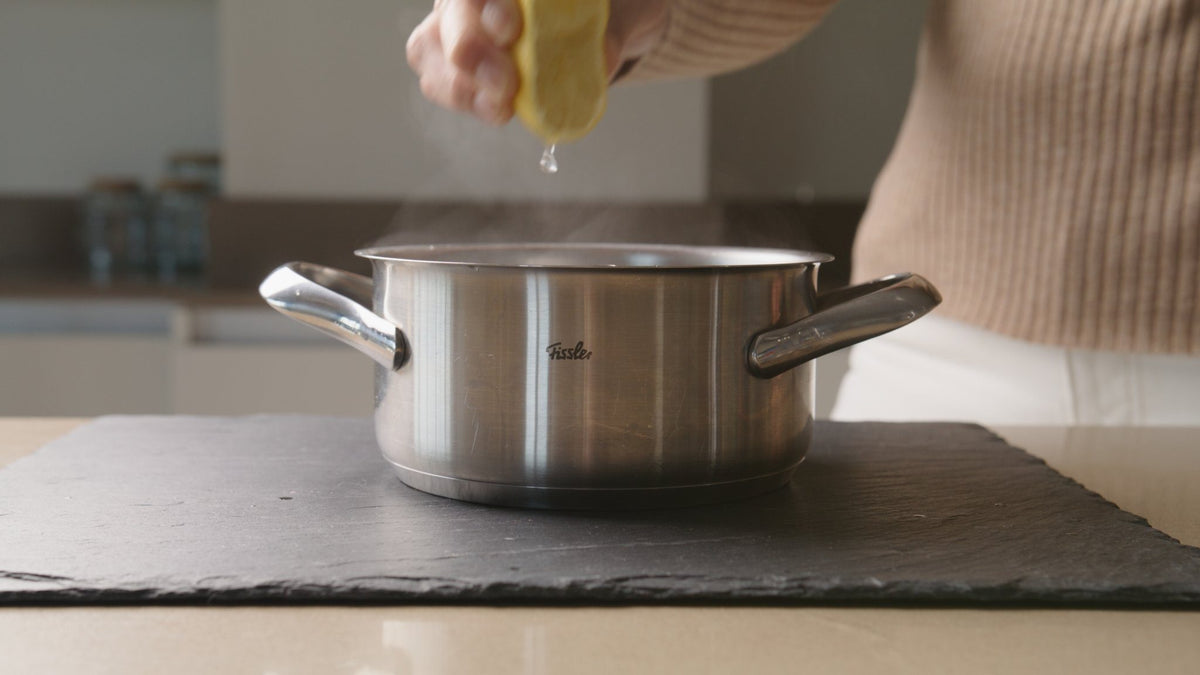
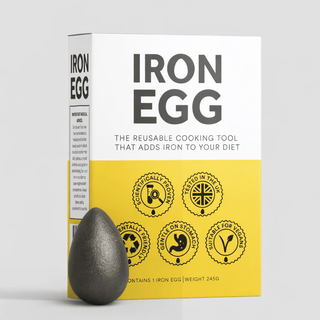
Yes. Food cooked in cast iron usually picks up iron, especially acidic dishes with plenty of liquid cooked for longer. That's Iron Enrichment™: adding natural iron to everyday food as you cook it. The Iron Egg is a solid piece of cast iron you cook with. Drop it into a pan of boiling water, a soup, stew or sauce, add a squeeze of lemon or something acidic so it releases more iron, then lift it out when you're done and rinse and dry it. The Iron Egg® adds natural iron to your food as it cooks, and it is UK lab tested.
Try it tonight
Braise a bag of spring greens or chard with a tin of tomatoes, a clove of garlic and a squeeze of lemon, and serve it alongside whatever you were already cooking. The squeeze of lemon helps your body take up more of the iron in the greens. Our iron-rich recipes have more built around the same idea.
Questions people ask
What vegetable has the most iron?
Leafy greens carry the most, with Swiss chard and spinach at the top, then spring greens, rocket and kale. Peas come in at a similar level, and most other vegetables carry much less.
Is spinach really that high in iron?
It is one of the better vegetables for iron, at about 1.6 mg per 100 g cooked, though your body takes up only part of it. Pair it with a squeeze of lemon to get more.
Do I get more iron from raw or cooked vegetables?
Raw vegetables usually read higher per 100 g than the same vegetable boiled. Spring greens, for example, are about 3.0 mg raw and 1.4 mg boiled. Whichever you cook, a squeeze of lemon on the plate helps your body take up more of the iron.
What else should I eat with my greens for iron?
Pulses like lentils or beans alongside your greens, with a squeeze of lemon, build a bigger iron meal. Our guide to iron in food has the bigger picture, our list of iron-rich foods covers the rest, and if you eat little or no meat, the guide for vegetarians and vegans goes further.